By the year 2026, the industrial and commercial landscape in Puerto Rico has reached a critical turning point. The traditional methods of facility management—once reactive and siloed—are no longer sufficient to protect assets in an era of energy volatility and climate intensity. Today, the conversation has moved from simply “maintaining” a building to ensuring its total resilience.
For organizations operating in Puerto Rico—especially those in the high-stakes pharmaceutical, medical device, and data center sectors—the mechanical infrastructure is the lifeblood of the operation. At MASE, we have witnessed the evolution of these facilities into Smart Buildings: ecosystems where mechanical engineering, digital monitoring, and environmental adaptability converge. This guide provides a deep dive into the standards, technologies, and strategies required to manage critical infrastructure in Puerto Rico’s unique 2026 landscape.
The Shift to Smart Building Facility Management in Puerto Rico
What exactly defines a “Smart Building” in the Caribbean context? It is not merely a structure with a fast internet connection; it is a facility that uses an integrated set of technologies to improve energy efficiency, occupant comfort, and, most importantly, operational reliability.
The Integration of BMS and IoT in Industrial Mechanical Systems
The backbone of any modern facility is the Building Management System (BMS). In 2026, MASE emphasizes the transition from closed, proprietary systems to open-protocol architectures (such as BACnet or Modbus) that allow for seamless communication between disparate mechanical units.
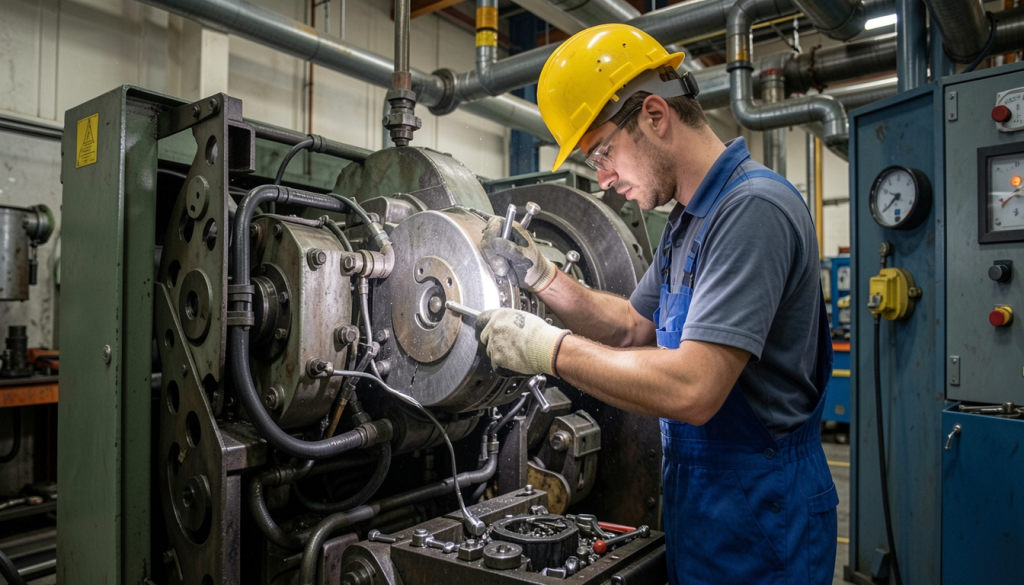
- Predictive vs. Preventive Maintenance: While preventive maintenance is scheduled, predictive maintenance uses IoT sensors to analyze vibration, temperature, and acoustics. This allows MASE engineers to identify a bearing failure in a chiller weeks before it occurs, preventing an unplanned shutdown of a cleanroom.
- Energy Optimization: Smart facilities use “Demand Response” strategies. In Puerto Rico, where energy costs are among the highest in the U.S., a smart building can automatically “load shed” or dim non-essential systems during peak tariff hours, saving thousands in monthly operational expenses.
Regulatory Compliance: Navigating the 2026 Standards
Compliance in Puerto Rico is a complex layering of federal (U.S.) and local (P.R.) mandates. For Facility Managers, staying ahead of these codes is not just about avoiding fines; it is about ensuring the building is insurable and resilient.
ASHRAE 90.1 and Energy Efficiency Mandates
The latest updates to ASHRAE 90.1 have set significantly higher bars for HVAC performance. In 2026, any major renovation or new construction in Puerto Rico must meet strict “Energy Use Intensity” (EUI) targets. MASE specializes in auditing legacy systems to bring them into compliance through high-efficiency motor upgrades and advanced thermal insulation.
Local Puerto Rico Building Codes and IBC 2024
The International Building Code (IBC), as adopted and amended by the Puerto Rico Planning Board, now includes more rigorous requirements for “Category IV” structures—those essential to post-disaster recovery (hospitals, fire stations, and critical manufacturing).
- Seismic Bracing: Mechanical equipment must be secured with certified seismic restraints.
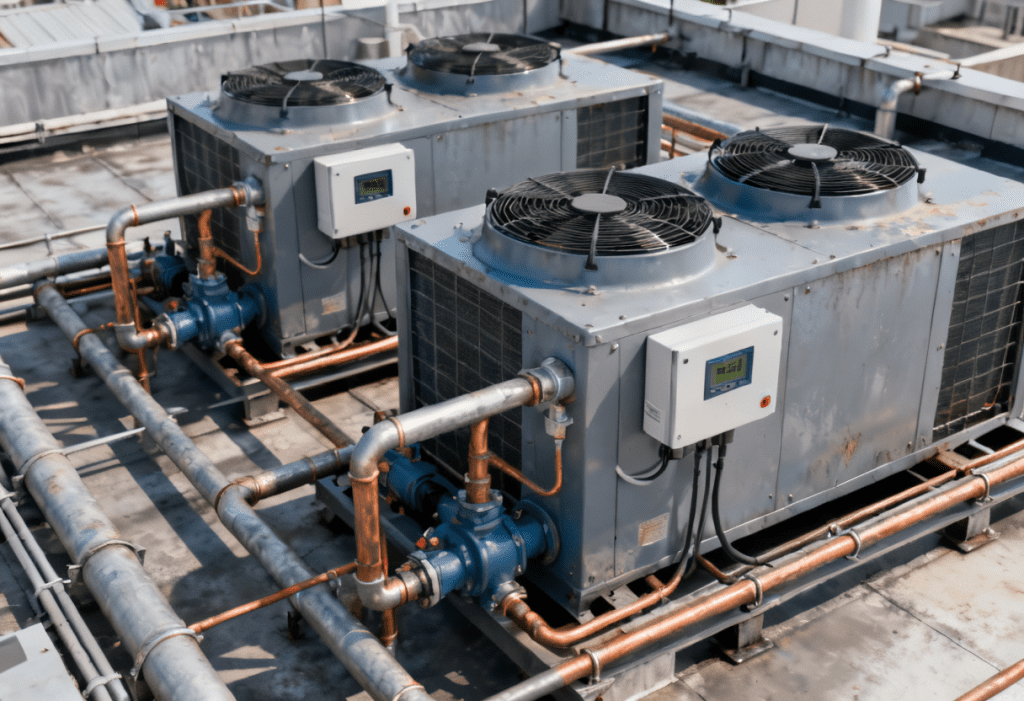
- Wind Load Resistance: Rooftop units must be rated to withstand 175+ MPH winds, a direct response to the lessons learned from Hurricane Maria and subsequent atmospheric events.
Critical Compliance Check for PR Facilities
Standard | Application | 2026 Critical Requirement |
ASHRAE 62.1 | Ventilation / Air Quality | Increased outdoor air rates and MERV-13 filtration. |
FEMA P-424 | School/Hospital Mechanicals | Hardening of rooftop equipment against wind-borne debris. |
NFPA 70E | Electrical Safety | Arc flash assessments for all industrial mechanical panels. |
ISO 50001 | Energy Management | Continuous monitoring of energy baseline and performance. |
Building Resilience: Hardening Critical Infrastructure
In Puerto Rico, resilience is the ability of a facility to maintain “mission-critical” functions during and after a catastrophic event. Given the island’s history of grid instability, MASE focuses on two key pillars: Redundancy and Autonomy.
Redundancy (N+1 and N+2 Philosophies)
For a pharmaceutical plant in Barceloneta or a data center in San Juan, a cooling failure is not an option. We design systems with N+1 redundancy, meaning there is always an extra chiller or air handler ready to take the load if the primary unit fails. In 2026, many of our clients are moving to N+2, providing an even deeper layer of security for ultra-sensitive environments.
Hardening Against the Caribbean Environment (Salitre and Humidity)
The “Silent Tax” on Puerto Rico’s infrastructure is corrosion. The salt-heavy air (salitre) can destroy a standard HVAC coil in less than three years.
- Protective Coatings: MASE mandates marine-grade epoxy coatings for all coastal mechanical installations.
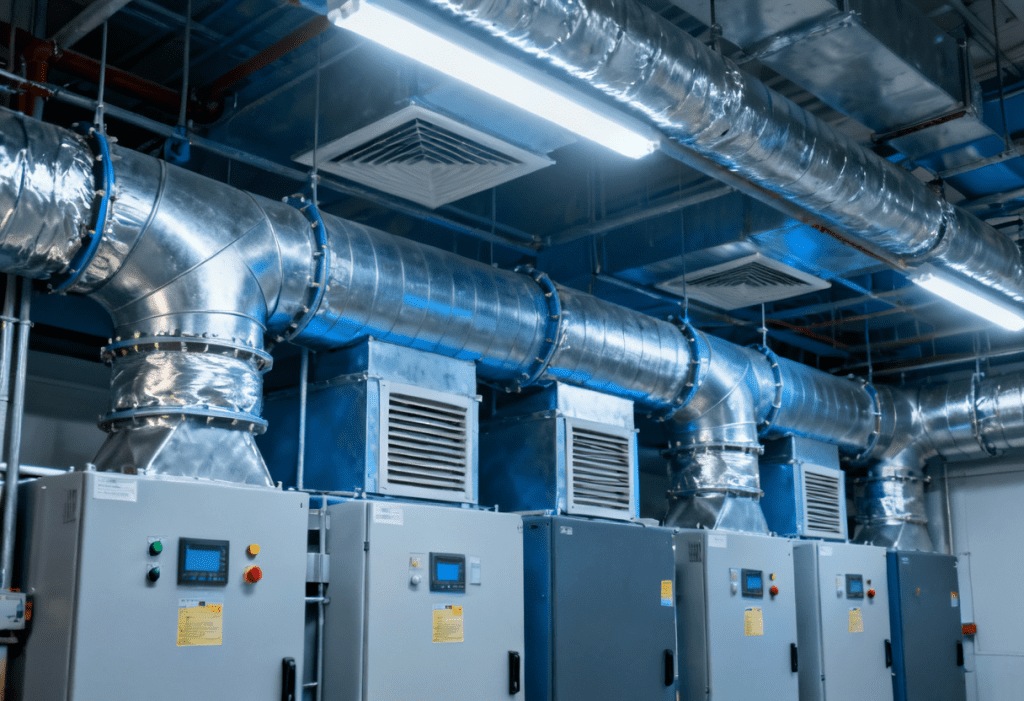
- Dehumidification Strategies: Managing the “Latent Load” is crucial. We implement dedicated outdoor air systems (DOAS) to strip moisture from the air before it enters the building, preventing mold growth and protecting sensitive electronics.
Retrofitting Legacy Facilities: The Path to Modernization
You do not need a new building to have a smart, resilient facility. In fact, most of the work MASE performs involves Retrofitting established structures in industrial parks like those in Manatí or Carolina.
The 4-Step Modernization Framework
- Comprehensive Energy & Infrastructure Audit: We identify “ghost loads” and inefficient mechanical components.
- VFD Integration: Installing Variable Frequency Drives on pumps and fans. This single change can reduce energy consumption by 30-50% during off-peak hours.
- Sensor Overlay: We install a mesh network of wireless sensors to monitor air pressure, humidity, and flow rates across the entire facility.
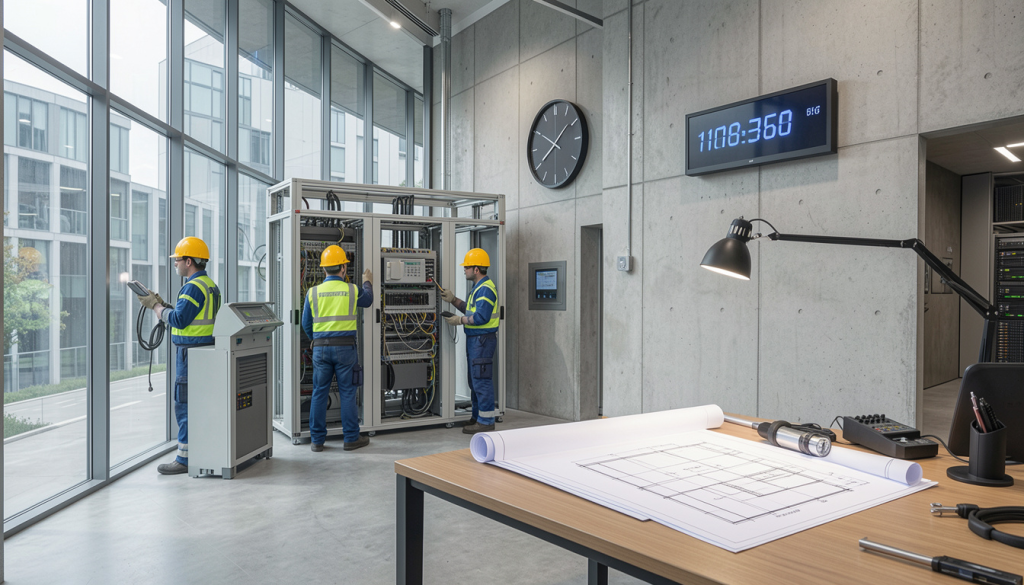
- BMS Modernization: We “bridge” legacy chillers and boilers into a modern, web-accessible dashboard, giving Facility Managers 24/7 visibility from any device.
The Financial Case for Resilience: ROI and TCO
C-Level executives often ask: “Is the cost of smart resilience worth it?” The answer is found in the Total Cost of Ownership (TCO).
5-Year Financial Impact of Smart Integration
Metric | Traditional Facility | Smart/Resilient Facility (MASE) |
Annual Energy Cost | $450,000 | $290,000 |
Unplanned Downtime | 18 Hours/Year | < 2 Hours/Year |
Insurance Premiums | Standard (Rising) | Discounted (Due to Resilience) |
Maintenance Staff Hours | High (Reactive) | Low (Data-Driven/Optimized) |
Cybersecurity for Industrial Mechanical Systems
As mechanical systems become more “connected,” they become vulnerable to cyber threats. In 2026, Facility Management Puerto Rico must include a cybersecurity strategy.
- OT (Operational Technology) Security: MASE ensures that your HVAC and BMS controllers are not on the same public IP as your guest Wi-Fi. We implement network segmentation to prevent “lateral movement” by hackers.
- Physical Security Integration: Smart buildings now use biometrics and geofencing to ensure that only certified technicians can access critical mechanical rooms or adjust setpoints in the BMS.
Building a Resilient Future with MASE
Managing a facility in Puerto Rico is a high-responsibility role that directly impacts a company’s bottom line and the safety of its people. As we navigate the complexities of 2026, the intersection of Mechanical Engineering and Technology has become the only sustainable path forward.
By embracing smart technology, adhering to the latest compliance codes, and prioritizing infrastructure hardening, your facility will not just survive the next decade—it will lead it. MASE is proud to be the strategic partner for those who build and manage the infrastructure of our island.
Frequently Asked Questions
How does MASE help with LEED or Energy Star certifications in Puerto Rico?
We provide the engineering documentation and system commissioning required to earn points in the Energy and Atmosphere (EA) and Indoor Environmental Quality (EQ) categories.
What is the life expectancy of a "hardened" HVAC system in PR?
With proper epoxy coatings and a MASE preventive maintenance plan, a high-quality industrial unit can last 15-20 years, even in coastal areas. Without hardening, that lifespan drops to 7-10 years.
Can a BMS system be managed remotely?
Yes. All our modern installations feature secure, encrypted remote access, allowing Facility Managers to adjust temperatures or clear alarms from home or while traveling.